
News
How to Choose Vegan Supplement Capsules Wisely
October 15, 2026
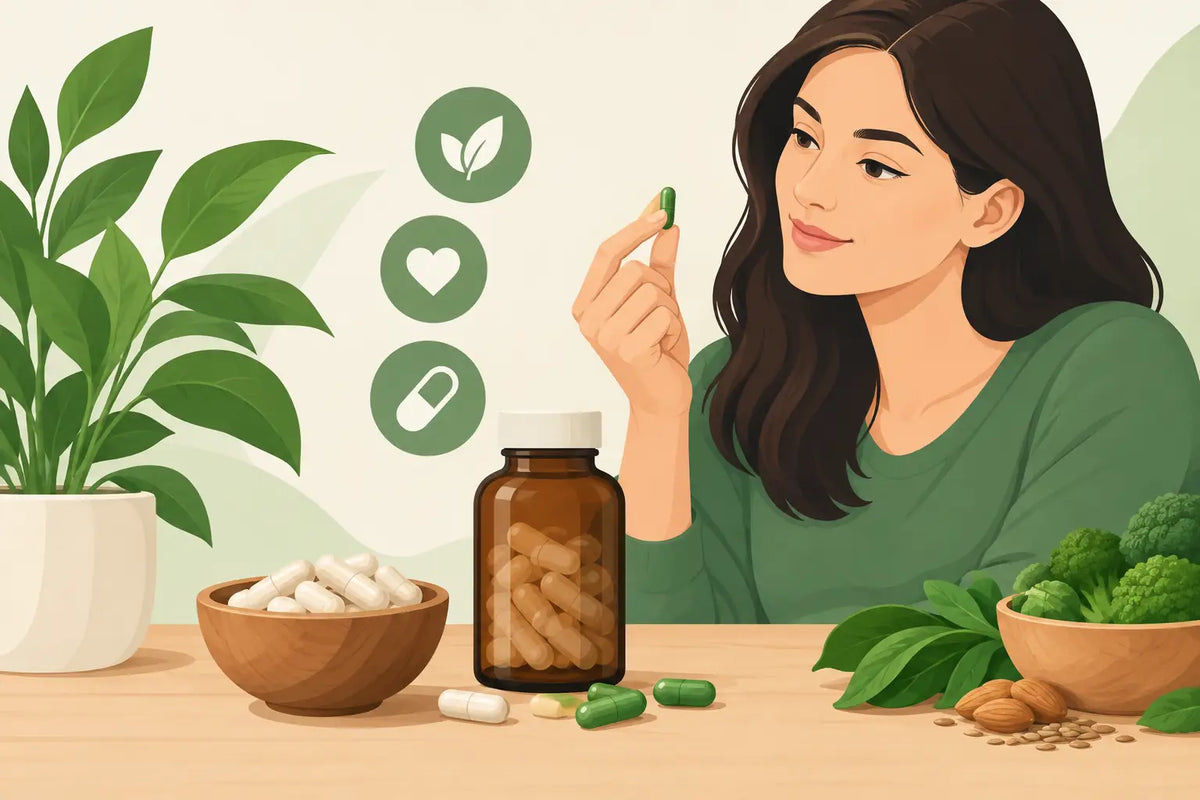
A capsule may look like a small detail, especially when you are focused on the ingredients inside. But when you choose vegan supplement capsules, the capsule material, label clarity, and manufacturing practices all contribute to whether a product truly fits your values and your wellness routine.
For women moving through perimenopause or menopause, a thoughtful choice can feel especially valuable. Changes in sleep, comfort, mood, focus, and energy are often interconnected. A well-considered supplement routine should feel clear and manageable, not like another complicated decision to carry.
Start with the capsule itself
Traditional capsules are often made with gelatin, which is derived from animal sources. Vegan capsules are generally made from plant-derived materials such as hypromellose, also called HPMC, or pullulan, a naturally fermented polysaccharide. Both are commonly used to create a clean, stable shell for powders and botanical extracts.
The word “vegan” on the front of a bottle is a useful starting point, but it should not be the end of your review. Look for a label that clearly identifies the capsule as vegan or vegetable-based. If the product uses a specialized coating, colorant, or delayed-release technology, check that these elements also align with the brand’s stated standards.
For many people, a vegan capsule is about more than avoiding animal-derived ingredients. It can be part of a broader preference for transparent choices, plant-forward formulations, and products that feel aligned with everyday values.
Look beyond vegan claims to the full formula
A vegan capsule does not automatically make a supplement a strong fit. What matters just as much is what the capsule contains, why those ingredients are included, and whether the label makes that easy to understand.
A focused formula should give each ingredient a clear supportive role. If you are choosing a botanical supplement for midlife wellness, consider whether the ingredients speak to the areas you would like to support, such as occasional temperature-related discomfort, nighttime relaxation, mood balance, mental clarity, or daily vitality. A long list of ingredients is not necessarily more thoughtful. In some cases, a shorter formula with purposeful amounts may be easier to evaluate.
Be cautious with labels that rely heavily on vague phrases such as “women’s blend” or “proprietary complex” without telling you how much of each ingredient is included. A proprietary blend can make it difficult to compare formulas or understand what you are taking. Transparent labels list individual ingredients and amounts, allowing you to make a more informed decision.
Botanical extracts deserve a closer look
Botanical names can be reassuringly familiar, but the details still matter. A label should identify the plant clearly and, when relevant, note the part used or the type of extract. For example, root, flower, leaf, and standardized extract are not interchangeable descriptions.
This does not mean every shopper needs to become an herbalist. It simply means you deserve enough information to recognize the formula. When a brand explains why it includes ingredients such as black cohosh, Siberian rhubarb, saffron, valerian, Korean ginseng, or red clover, it signals a more deliberate approach than a label built around broad promises.
Check the “other ingredients” panel
The Supplement Facts panel gets most of the attention, while the “other ingredients” section can reveal just as much about a product’s design. This is where you may find the capsule material along with flow agents, fillers, colors, or anti-caking ingredients.
Some added ingredients are used for practical manufacturing reasons and are not automatically a concern. The key is whether they are disclosed and appropriate for your preferences. If you prioritize a simpler formula, look for labels that keep this section concise and understandable.
Also consider common dietary needs. A product described as vegan may still contain gluten, soy, or other ingredients you prefer to avoid. If gluten-free, non-GMO, or allergen-conscious standards matter to you, look for those claims on the package and read the complete label rather than assuming they are included.
Choose quality standards you can see
Supplements are personal, so quality should not be a mystery. Responsible brands share practical information about where and how their products are made. For US shoppers, manufacturing in facilities that follow current Good Manufacturing Practices, often written as cGMP, is one useful quality signal. These standards address procedures such as recordkeeping, sanitation, and consistency in manufacturing.
Clear contact information, a complete Supplement Facts panel, suggested use instructions, and appropriate cautions also matter. These details may not be glamorous, but they show that a company is approaching wellness with care.
Packaging can offer helpful clues, too. A safety seal, lot number, and expiration or best-by date support product traceability and freshness. This is particularly relevant for botanical formulas, which should be stored according to the label instructions to help maintain their intended quality.
Match the routine to your real life
The best supplement is not the one with the most ambitious story. It is the one you can understand and use consistently as directed. Before purchasing, consider capsule size, the number of capsules per serving, and whether the schedule suits your day.
A 30-day supply, for example, can make it easier to build a steady habit and notice how the routine feels over time. If swallowing capsules is difficult, do not force a format that creates daily friction. A powder, tablet, or liquid may be a better choice, even if the ingredient profile is otherwise appealing.
It also helps to set realistic expectations. Botanical supplements are intended to complement a healthy routine, not to create an overnight transformation. Factors such as sleep habits, food, movement, stress, and individual health history all shape how you feel day to day. Give yourself permission to choose support that is steady, practical, and respectful of your own experience.
Safety belongs in a thoughtful choice
“Plant-based” does not mean “right for every person.” Botanical ingredients can interact with medications and may not be appropriate in every circumstance. Review the full label before starting a new supplement, especially if you take medication, have a health concern, are pregnant or nursing, or are preparing for a procedure.
When questions arise, a qualified healthcare professional or pharmacist who knows your personal medication history can help you assess potential interactions. Do not use a supplement to replace prescribed care or change a medication plan without professional guidance.
This is also a reason to favor brands that include meaningful cautions rather than treating safety language as an afterthought. Responsible guidance is part of feeling supported through change.
A focused example of vegan capsule standards
Allegro Nutrition’s Menopause Relief formula reflects the value of a purposeful multi-botanical approach. Its 60-capsule, 30-day formula uses vegan capsules and combines nine botanicals selected for distinct areas of daily midlife support, including comfort, relaxation, mood, clarity, and vitality. It is also formulated without gluten and made in the US under current Good Manufacturing Practices.
The point is not that every woman needs the same formula. It is that a good label should help you see the thinking behind the product: recognizable ingredients, transparent amounts, practical quality standards, and a routine designed to fit real life.
Let clarity guide the decision
Choosing a vegan supplement capsule is ultimately an act of self-direction. Read the label slowly. Ask whether the ingredient list is understandable, whether the quality standards are visible, and whether the routine feels realistic for you. The right choice does not need to be complicated - it needs to feel considered, comfortable, and aligned with the support you want each day.
These statements have not been evaluated by the Food and Drug Administration. Dietary supplements are not intended to diagnose, treat, cure, or prevent any disease.