
News
How to Evaluate Botanical Extract Strength
September 23, 2026
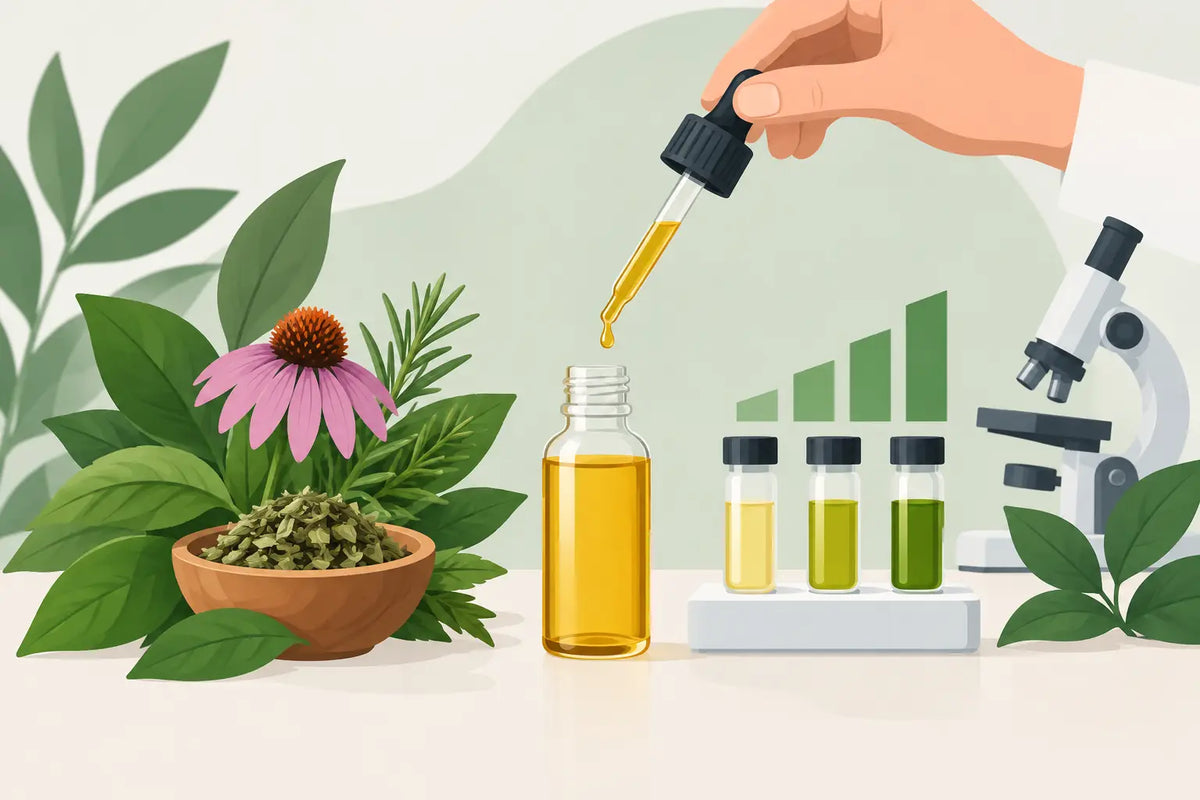
A supplement label can make a botanical extract sound impressive with a large number, an unfamiliar ratio, or a long scientific name. To evaluate botanical extract strength with confidence, look beyond the biggest number on the front of the bottle. The useful details are usually found in the Supplement Facts panel: the plant part, extract amount, daily serving, standardization information, and the rest of the formula.
For women seeking thoughtful, non-hormonal support through perimenopause or menopause, this matters. A well-made botanical formula should feel understandable. You deserve to know what is in it, why it is included, and how the label supports a sensible daily routine.
What Botanical Extract Strength Actually Means
“Strength” is not one single measurement. Depending on the ingredient, it may refer to the amount of extract in milligrams, the concentration of certain naturally occurring compounds, or the relationship between raw plant material and the finished extract.
A higher number is not automatically a better one. Different botanicals have different preparation methods, constituent profiles, and intended roles in a formula. For example, an ingredient included to support evening relaxation may be present at a different amount than one selected for daytime energy or mental clarity. The goal is not to compare every botanical by the same rule. It is to understand whether the label clearly explains what you are taking.
Start With the Daily Serving, Not the Capsule Count
First, find the serving size. Some products list one capsule as a serving, while others require two or more capsules to reach the labeled daily amount. The number that matters is the amount you would take in a full day according to the label.
If a formula lists 250 mg of an extract per serving and the serving is two capsules, 250 mg is the daily amount, not 500 mg. Conversely, if the panel lists 250 mg per capsule and directs you to take two, the daily amount is 500 mg. This small distinction makes comparisons much more accurate.
Read the Botanical Name and Plant Part
A transparent label identifies the botanical by its common name and Latin name, such as Actaea racemosa for black cohosh or Crocus sativus for saffron. The Latin name helps distinguish the intended plant from similarly named species.
The plant part also matters. Roots, rhizomes, flowers, leaves, seeds, and berries can contain different naturally occurring compounds. A label that specifies “root extract” or “stigma extract” offers more context than one that simply says “herbal blend.” It is a sign that the manufacturer is willing to be precise.
This does not mean every label needs to read like a textbook. It means the information should be clear enough for a consumer to recognize the ingredient and understand the form being used.
Understand Milligrams, Ratios, and Standardization
Three label terms often create confusion: milligrams, extract ratios, and standardization. Each describes something different.
Milligrams Show the Extract Amount
Milligrams, abbreviated as mg, tell you how much of the finished extract is included in a serving. This is the most direct quantity on the label, but it does not tell the full story by itself. Two extracts from the same plant may have different concentrations or processing methods, so equal milligram amounts are not always identical in composition.
Still, clearly listed milligrams are valuable. They allow you to compare formulas, review the total daily serving, and avoid guessing what is inside a blend.
Extract Ratios Describe the Starting Material
You may see an extract ratio such as 10:1 or 20:1. In simple terms, this describes the relationship between the starting botanical material and the resulting extract. A 10:1 ratio generally indicates that ten parts of raw plant material were used to produce one part of extract.
It can be tempting to assume a 20:1 extract is twice as strong as a 10:1 extract. That is not always true. Ratios do not reveal the extraction solvent, the plant part, the target compounds, or how consistently the material was processed. They are useful context, not a complete quality score.
Standardization Identifies a Consistent Marker
A standardized extract is made to provide a consistent level of a specified naturally occurring compound or group of compounds. For instance, a label may state that an extract is standardized to a certain percentage of a marker constituent.
Standardization can help create consistency from batch to batch, particularly because plants naturally vary with growing conditions, harvest timing, and processing. But a standardized percentage is not automatically proof that one product is superior. The named marker may be relevant for one botanical and less meaningful for another. Consider it alongside the full label, not as a stand-alone promise.
Look at the Formula, Not Just One Ingredient
Single-ingredient comparisons are useful when you are considering one botanical at a time. Multi-botanical formulas require a wider view. Each ingredient should have a clear supportive role, and the overall serving should fit the product’s purpose.
For menopause support, a formula may pair botanicals associated with comfort during temperature changes, mood balance, relaxation, focus, or daily vitality. The point is not to crowd a label with every trending herb. A more focused approach can make it easier to understand why each ingredient is present and whether the formula suits your priorities.
This is where transparent formulas stand apart from catch-all blends. If nine botanicals are included, you should be able to see all nine, their amounts, and the form of each extract. Allegro Menopause Relief, for example, identifies its botanical ingredients individually rather than placing them behind a proprietary blend.
Be Careful With Proprietary Blends
A proprietary blend lists a combined total for several ingredients without disclosing the amount of each one. A product may state that its “menopause support blend” contains 800 mg, yet you cannot tell how much black cohosh, saffron, valerian, or any other botanical is actually included.
That does not automatically make a blend unsuitable. Some companies use blends to protect formulation details. But it does limit your ability to compare serving amounts, assess duplication across products, or discuss a specific ingredient with a healthcare professional.
For shoppers who value ingredient transparency, individually disclosed amounts provide a clearer foundation for decision-making.
Consider Quality Signals Beyond the Extract
Strength is only one part of the choice. The product’s manufacturing practices, label clarity, and suitability for your routine matter just as much. Look for a complete Supplement Facts panel, a stated serving size, recognizable inactive ingredients, and clear use directions.
For many women, standards such as vegan, non-GMO, and gluten-free can also be meaningful. Manufacturing in facilities that follow current Good Manufacturing Practices adds another practical quality signal. These standards do not predict a particular personal experience, but they show care in how a supplement is produced and presented.
Be cautious with labels that rely on vague phrases such as “maximum potency” without providing the information needed to evaluate that claim. A calm, specific label is usually more useful than a dramatic one.
Use Strength Information Responsibly
Botanicals are active ingredients, even when they are familiar and plant-based. More is not always more appropriate, and combining several supplements can unintentionally duplicate ingredients. Before adding a new product, review what you already take, including teas, powders, gummies, and sleep formulas.
If you take medication, are pregnant or nursing, have a planned procedure, or have questions about whether a botanical fits your personal circumstances, speak with a qualified healthcare professional before use. Follow the product label and do not exceed the suggested serving simply because a formula contains ingredients you recognize.
It can also help to introduce one new supplement routine at a time. That gives you space to notice how it fits into your day without changing several variables at once.
A Clear Label Supports a Clearer Choice
The best way to evaluate botanical extract strength is to ask straightforward questions: What is the daily amount? Which plant part and extract form are used? Is standardization explained? Are individual ingredients disclosed? Does the formula have a focused purpose and quality standards that align with your values?
You do not need to decode every botanical term perfectly to make an informed choice. Start with transparency, look for a formula built with intention, and choose support that feels appropriate for your changing season and everyday life.