
News
Hormone Free Menopause Supplements, Explained
July 21, 2026
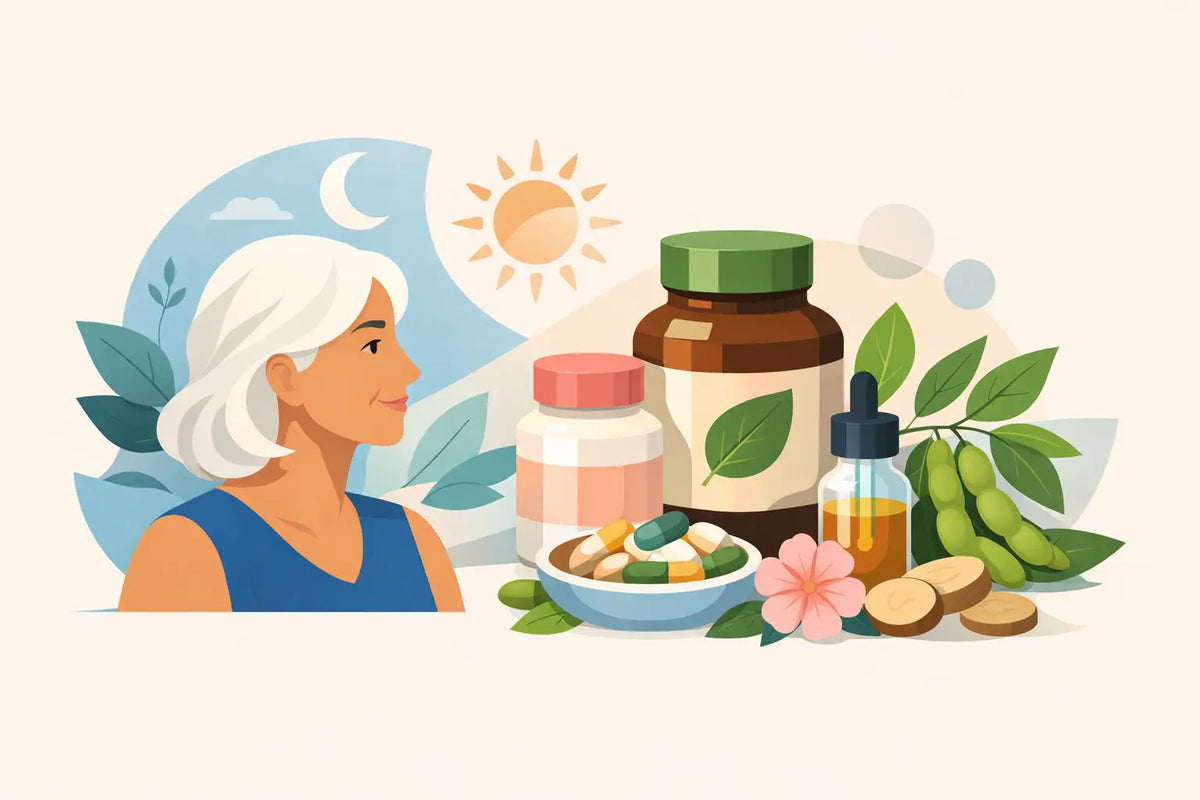
A hot flash at 2 a.m. can make the next day feel longer before it even begins. When sleep is lighter, moods feel less predictable, and focus seems harder to hold onto, many women want support that feels considered - not complicated. Hormone free menopause supplements can be one option for women who want to explore botanical daily support without adding estrogen or progesterone to their routine.
The best choice is rarely the product with the longest ingredient panel or the boldest promise. It is the one with a clear purpose, recognizable ingredients, thoughtful quality standards, and guidance that respects your individual health history.
What Hormone Free Menopause Supplements Mean
A hormone-free supplement does not contain prescription or bioidentical hormones such as estrogen, progesterone, or testosterone. Instead, these formulas typically use vitamins, minerals, or plant-based ingredients selected to support comfort through common menopause changes, including occasional hot flashes, disrupted sleep, shifting mood, and lower everyday energy.
That distinction matters, particularly for women who prefer not to use hormone therapy or who are discussing non-hormonal options with their healthcare professional. Still, “hormone-free” should not be confused with “appropriate for everyone.” Some botanicals contain naturally occurring compounds, including phytoestrogens, that may interact with hormone-related pathways in the body. A transparent label and an informed conversation with your clinician are both part of choosing well.
Menopause is not one symptom with one answer. It is a transition that can affect temperature regulation, sleep, mental clarity, emotional steadiness, and stamina at the same time. A focused multi-botanical formula can make sense because it recognizes that those experiences are connected while assigning each ingredient a purposeful role.
Choosing Hormone Free Menopause Supplements
Start by looking past front-label language. “Natural” alone does not tell you what is in a formula, how much you are taking, or whether the ingredients fit your needs. A quality supplement should clearly list every active ingredient and its amount, along with suggested use and relevant warnings.
A formula with a defined botanical strategy is often easier to evaluate than a catch-all blend. If warmth and nighttime rest are your main concerns, look for ingredients chosen with those goals in mind. If mood, concentration, or daytime vitality feel more pressing, consider whether the formula includes botanicals traditionally used to support those areas as well.
It also helps to set realistic expectations. Supplements are not an overnight reset, and response varies from person to person. Consistency matters. Give a new routine time, track how you feel, and avoid adding several new products at once. That way, you have a clearer sense of what is serving you.
Look for purpose-led botanicals
Several botanical ingredients appear frequently in menopause formulas, but their inclusion should be more than a marketing checklist. Black cohosh is commonly used in formulas designed around menopausal comfort, especially for women experiencing occasional warmth and sweating. Siberian rhubarb extract is another well-known botanical used in menopause support products.
Red clover contains isoflavones, naturally occurring plant compounds that are often part of hormone-free formulas. Because of this characteristic, women with a history of hormone-sensitive conditions should ask their healthcare professional whether red clover is suitable for them.
Saffron can be a thoughtful addition when emotional balance is part of the conversation. Valerian is traditionally used to support relaxation, making it a natural fit for formulas that acknowledge how closely sleep and menopausal comfort can overlap. Korean ginseng may be included to support daily vitality and mental stamina.
No single botanical has to carry the full weight of the formula. A well-designed blend considers how women actually move through the day: warmth that interrupts a meeting, a restless night that affects patience the next morning, or an afternoon energy dip that makes ordinary tasks feel heavier. The goal is supportive daily balance, not a dramatic promise.
Choose transparency over proprietary mystery
A proprietary blend can make it difficult to know how much of each ingredient you are taking. That does not automatically mean a product is poorly made, but it limits your ability to compare formulas and discuss them clearly with a healthcare provider.
Look for products that identify the exact extracts used and disclose their amounts. Quality markers matter, too. Vegan, non-GMO, and gluten-free standards may be meaningful if they align with your preferences or dietary needs. Manufacturing in the United States under current Good Manufacturing Practices provides another useful signal that a brand takes process and consistency seriously.
Allegro Menopause Relief takes this focused approach with nine clearly identified botanical extracts, including black cohosh, Siberian rhubarb, saffron, valerian, Korean ginseng, and red clover, in a 30-day, 60-capsule hormone-free formula.
Make Room for the Rest of Your Routine
A supplement works best as one steady part of a broader self-care plan. This is not about building a perfect routine. It is about noticing the small adjustments that help your body feel more supported through change.
For some women, a cooler bedroom, breathable bedding, and a consistent wind-down ritual can make nights feel more manageable. For others, regular meals with adequate protein, a daily walk, strength training, or a short pause between work and home responsibilities helps create more stable energy and mood. Your needs may shift from month to month, and your routine can shift with them.
Keep a simple note on sleep, warmth episodes, mood, and energy for a few weeks. Patterns can be surprisingly useful. You may notice that alcohol, late-night meals, stress, or a warm room affects your comfort more than expected. You may also see progress that feels gradual rather than dramatic - fewer disrupted nights, a steadier afternoon, or more confidence in your daily rhythm.
Safety Belongs in the Decision
Plant-based does not mean interaction-free. Before starting a menopause supplement, speak with a healthcare professional or pharmacist if you take prescription medication, especially medicines for mood, sleep, blood pressure, blood clotting, diabetes, or hormone-related conditions. This is also important if you are pregnant, breastfeeding, preparing for surgery, or managing liver disease.
Be especially thoughtful with formulas containing black cohosh, red clover, valerian, saffron, or ginseng. Depending on your health history and medications, one or more of these ingredients may not be the right fit. If you experience unusual symptoms after starting a supplement, stop using it and seek medical guidance.
Supplements are not intended to diagnose, treat, cure, or prevent disease. They should complement, not replace, personalized medical care. New, severe, or rapidly changing symptoms deserve a conversation with your clinician, particularly postmenopausal bleeding, chest pain, severe headaches, or persistent changes in mood.
Support That Respects Your Season
Menopause can ask more of you than many people realize. Choosing a hormone-free formula is not about resisting change or settling for less support. It is about finding an approach that feels aligned with your body, your preferences, and your daily life. Read the label, ask the practical questions, and choose support that helps you meet this season with more comfort, steadiness, and confidence.