
News
Menopause Energy Support That Meets You Where You Are
August 16, 2026
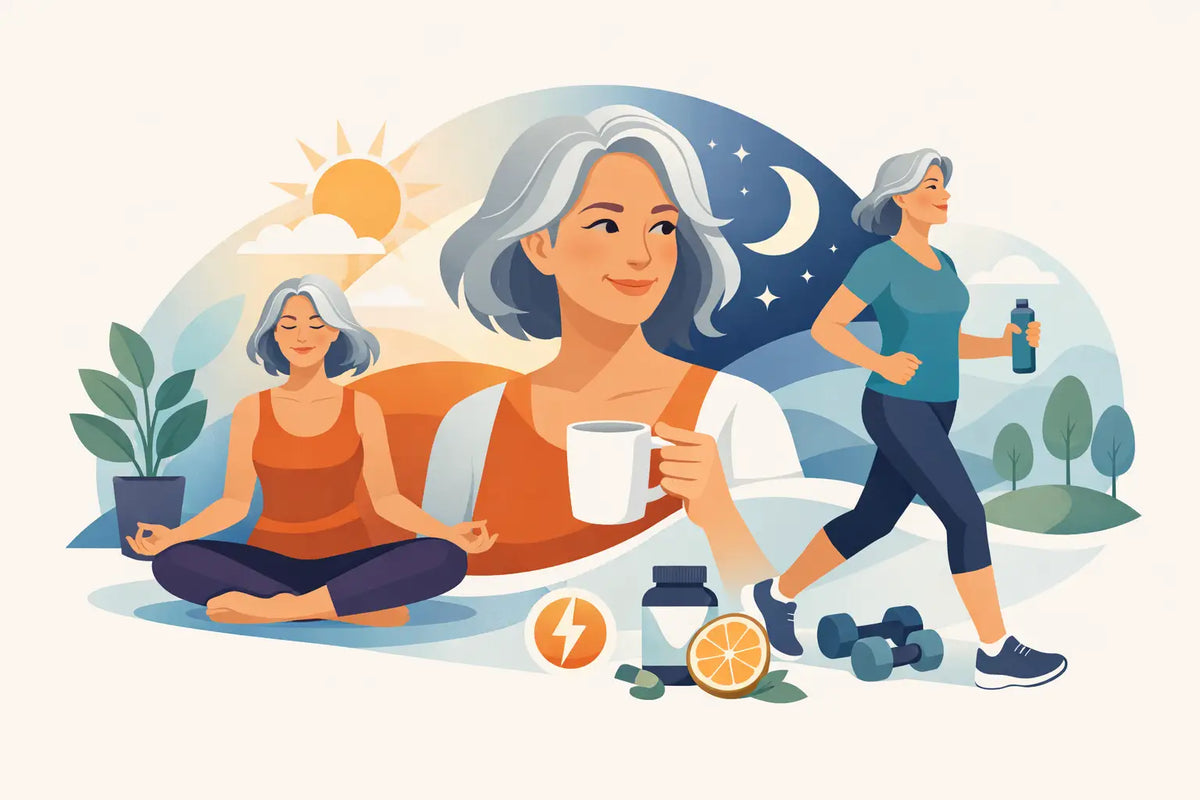
Some days, the change in energy is subtle: an afternoon task takes more effort than it once did, or your usual morning routine feels less restorative. Other days, interrupted sleep, warmth at night, shifting moods, and a full calendar can make daily vitality feel harder to access. Menopause energy support is not about pushing through or expecting yourself to feel the same every day. It is about creating conditions that help you feel steadier, more comfortable, and more like yourself.
Perimenopause and menopause can affect energy from several directions at once. That is why the most supportive approach is often a connected one: thoughtful sleep habits, regular nourishment, gentle movement, moments of recovery, and, for some women, a carefully selected non-hormonal botanical supplement.
Why energy can feel different during menopause
Energy is not simply a measure of how much you sleep. A disrupted night can leave you tired, certainly, but so can the mental effort of managing temperature changes, a busy household, work demands, or the feeling that your usual rhythm has shifted. Focus may feel less reliable. Motivation can come and go. You may have enough energy to get through the day, yet not enough left for the things that restore you.
This is a normal experience for many women in this season of life, and it deserves a practical response rather than self-criticism. The goal is not perfection. It is to notice which factors make your days feel more supported and build a routine around them.
Build a foundation for steadier daily vitality
A supplement can be one part of a wellness routine, but it cannot replace the basics that shape energy throughout the day. Small adjustments are often more sustainable than a dramatic reset.
Protect the quality of your evenings
When nights are unsettled, a consistent wind-down routine can make a meaningful difference in how prepared you feel for rest. Keep the bedroom comfortably cool, choose breathable bedding, and give yourself a little distance from work messages and scrolling before bed. A short ritual, such as reading, stretching, or a warm shower, can signal that the day is ending.
It also helps to look at evening habits with curiosity. A late, heavy meal, alcohol, or caffeine too close to bedtime may affect comfort or rest for some women. There is no single rule that fits everyone, so consider what you notice over a week or two rather than judging one difficult night.
Eat for consistency, not restriction
Long gaps between meals can leave energy feeling uneven. Regular meals that include protein, fiber-rich carbohydrates, and satisfying fats can support a more stable pace through the day. Think eggs and whole-grain toast at breakfast, a grain-and-greens bowl with beans or chicken at lunch, or yogurt, fruit, and nuts as an afternoon snack.
Hydration matters here, too. Reaching for more coffee when you are tired is understandable, but water and a nourishing snack may be more helpful when the real issue is a missed meal or a busy day. If caffeine supports your morning, there is no need to make it a problem. Simply pay attention to timing and how it affects your personal sleep pattern.
Choose movement that gives energy back
Movement does not need to be intense to be worthwhile. A walk after lunch, light strength training, yoga, dancing in the kitchen, or a few minutes of mobility work can help you reconnect with your body and break up a long stretch of sitting. On lower-energy days, gentler movement may be the right choice.
The best routine is one you can return to without dread. Some women enjoy structured workouts; others feel their best with frequent, uncomplicated movement woven into the day. Both can be valuable.
Make room for mental recovery
Midlife is often a season of competing responsibilities. When every hour has a demand attached to it, mental fatigue can look and feel like physical tiredness. A brief pause between meetings, a few minutes outside, or a boundary around late-day obligations can protect more than your schedule.
This is not about doing less because you are less capable. It is about recognizing that recovery is part of a well-supported life. Energy is easier to sustain when there is room to replenish it.
Menopause energy support with purpose-led botanicals
For women seeking non-hormonal daily support, a multi-botanical formula may offer a convenient way to address several interconnected concerns in one routine. What matters is formulation quality and clarity. You should be able to see what is included, understand why it is there, and avoid vague promises that ask you to take more on faith.
Allegro Menopause Relief is designed around that focused approach. Its hormone-free, 30-day formula combines nine botanical extracts selected to support comfort, nighttime relaxation, mood balance, mental clarity, and daily vitality. Rather than treating energy as an isolated concern, the formula recognizes that a more settled night and greater day-to-day comfort may be part of feeling more present during the day.
Black cohosh and Siberian rhubarb are included for menopausal comfort. Saffron is included to support a balanced mood, while valerian supports nighttime relaxation. Korean ginseng is a familiar botanical for daily vitality and mental focus. Red clover is another purpose-led component within the blend. Together with the remaining botanical extracts, these ingredients create a considered formula for women who prefer plant-based, non-hormonal support.
A multi-ingredient product is not automatically the best choice for every person. Some women prefer a targeted single botanical because they want to simplify their routine or identify how one ingredient suits them. Others value a formula that brings several complementary forms of support together. Your preferences, existing routine, and sensitivity to ingredients all matter.
What to look for in a daily supplement
The label should do more than list attractive-sounding ingredients. Look for exact botanical components and clear directions, not a hidden proprietary blend that leaves you guessing about what you are taking. Consider whether the formulation fits your dietary preferences and whether the brand explains its quality standards plainly.
Allegro Menopause Relief is vegan, non-GMO, and gluten-free, and it is manufactured in the United States under current Good Manufacturing Practices. Those details do not promise a particular outcome, but they can help you make a more informed choice about a product you plan to use consistently.
Consistency is usually more useful than constantly changing your routine. If you choose to try a supplement, take it as directed and give yourself time to notice how it fits into your days. A simple note on sleep, comfort, focus, and energy can help you recognize patterns without turning wellness into another demanding task.
A few thoughtful safety considerations
Botanical supplements deserve the same care as any other part of your routine. Review the full ingredient label before use, especially if you take prescription or over-the-counter medications, use other supplements, are pregnant or nursing, or have questions about whether a particular ingredient is appropriate for you. A qualified healthcare professional or pharmacist can help you review potential medication interactions.
More is not necessarily better. Avoid stacking multiple products with overlapping botanicals without first checking the labels. If you experience an unwanted reaction, stop using the product and seek guidance from a healthcare professional.
Dietary supplements are not intended to diagnose, treat, cure, or prevent any disease. Individual experiences can vary, and no supplement can replace personalized medical care when you need it.
Let your routine reflect the season you are in
Support can be wonderfully ordinary: a protein-rich breakfast, a walk that clears your head, a cooler room at night, a botanical formula you understand, and permission to adjust the pace when your body asks for it. Menopause is a change, not a failure of your former routine. With attentive choices and a little patience, you can create a daily rhythm that makes space for balance, energy, and confidence.